Marine Mammals, Human Impact & Protected Areas
Why is this project important?
Whales and dolphins are ambassador species, so conservation actions that mitigate threats to them usually also result in protection for entire communities of organisms and the ecosystem itself. Our year-round studies of these and other marine mammals, both inside and outside Marine Protected Areas (MPAs) as well as along their coastal corridors off California, are an essential tool to assess human disturbance, as well as to guide the management and expansion of these critical, protected areas.

What has our research team already learned?
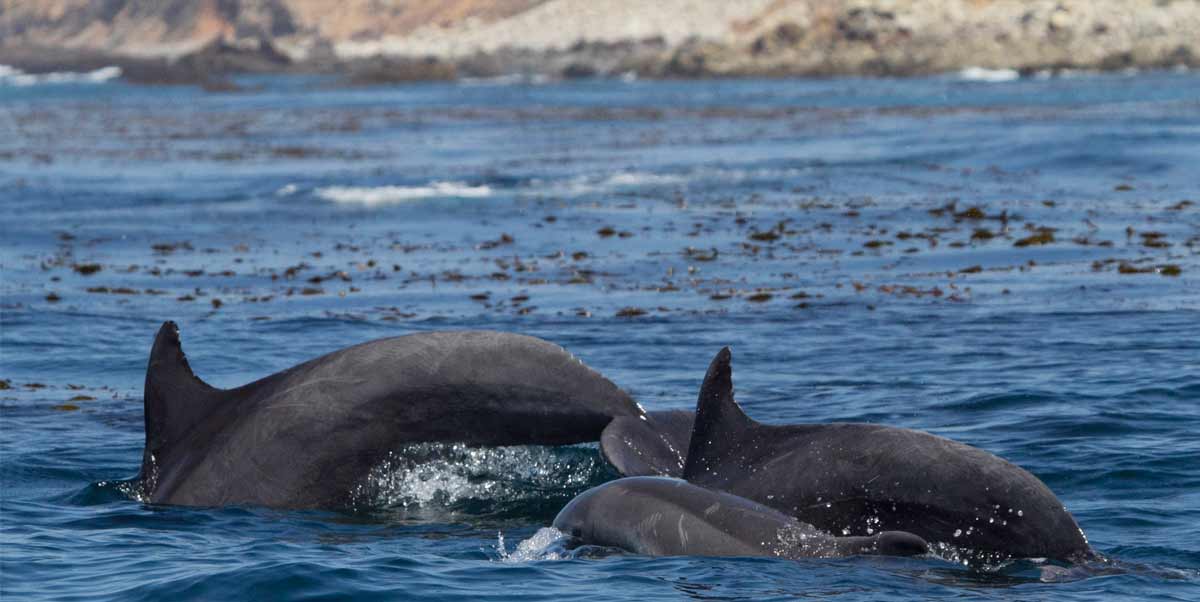
Our past studies show that Southern California is abundant in dolphins, whales, porpoises, and pinnipeds (sea lions and harbor seals), including threatened and endangered species which feed in this area and within the local Marine Protected Areas (see our publications).
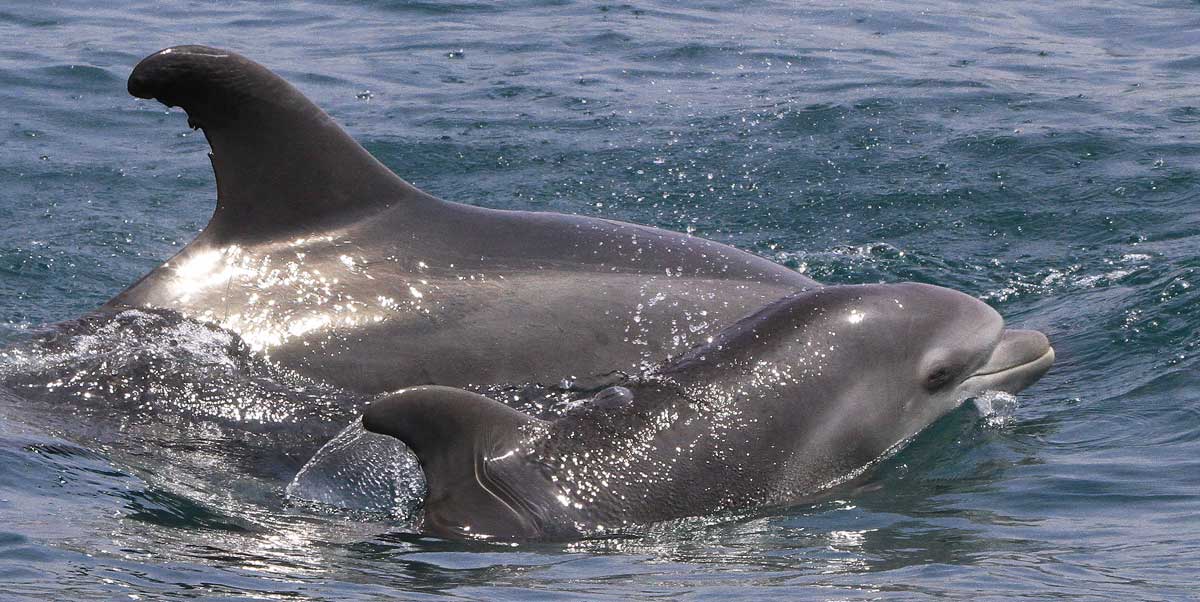
We also discovered that the regions near-shore serve as regular transit “corridors” for coastal bottlenose dolphins, which use them to find their prey (see movements of bottlenose research project and publications). These corridors are often ignored in the design of MPAs but they are important to the long-term well-being of these animals.
Protecting these corridors, and including them in the design and expansion of MPAs and MPA networks, is essential to ensure that the connection between critical habitats remains unbroken.
Based on our past research, we also believe monitoring must be conducted regularly and year-round to better understand the needs of the local marine mammals.
“In order for ecosystem restoration to be successful it must be holistic. Long-term Marine Protected Area success includes protecting transient species, such as cetaceans (whales, dolphins and porpoises), that are critical parts of the ecosystem.”
What are our current project goals?
Marine Protected Areas
Our main goal is to analyze data on distribution, occurrence, frequency, and behavior of marine mammals collected along coastal corridors as well as within and outside the boundaries of the local coastal MPAs. The results from this study can be useful for:
• Policy recommendations regarding already established protected areas
• Identifying other potential critical areas / corridors that may deserve consideration
Human Impacts
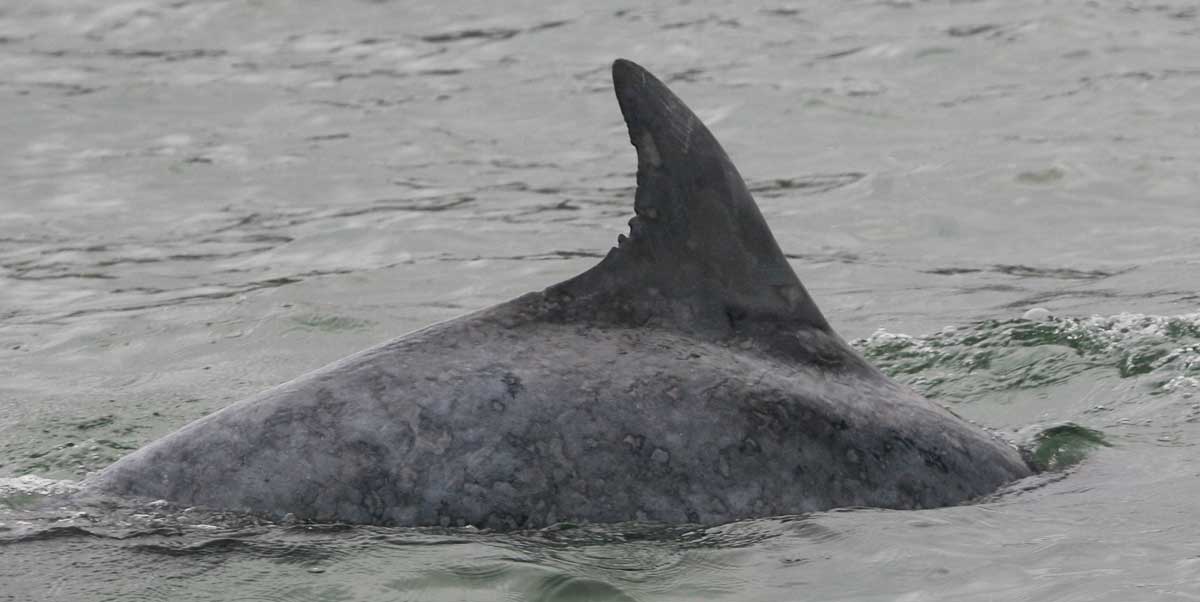
Another important objective is to determine the human impact on marine mammals in our study area. Close interactions with humans put cetaceans at risk of injuries from boat strikes and entanglements in fishing gear (see our Be Whale Aware Campaign).
Our goal is to assess the presence and extent of physical injuries on individuals due to interactions with recreational tourism and commercial fishing (body lacerations, loss of appendages or mobility, internal injuries, interference with foraging and other behaviors, etc). We also plan to assess compliance of whale and dolphin watching operations with current guidelines and Marine Mammal Protection Regulations.
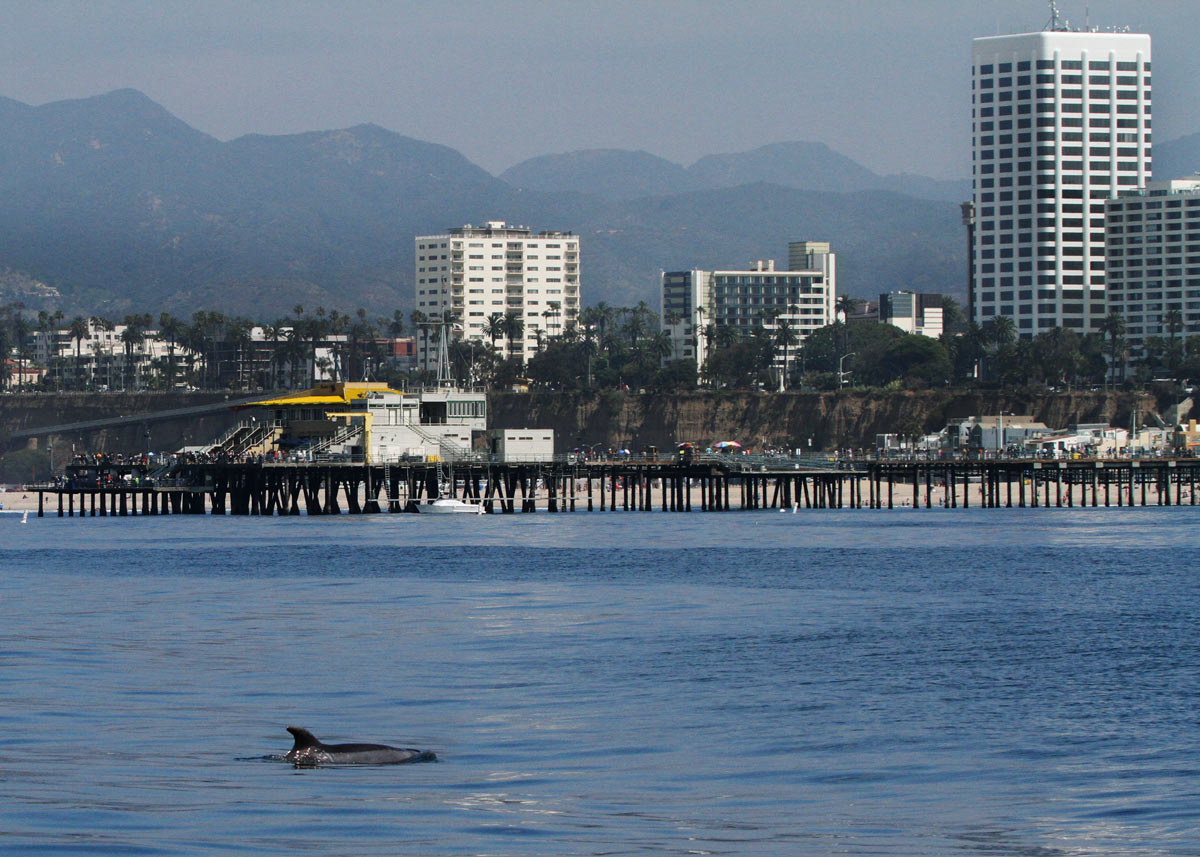
“The Santa Monica Bay gives a unique opportunity to study dolphin behaviors in an urban setting. By observing their behaviors, our research can help influence Marine Protected Area legislation, educate us on minimizing adverse interactions with humans, and give us clues to the health of individuals and the species as a whole. It is imperative to do this research now to protect and preserve whales and dolphins for future generations.”
How do we collect data for this project?
Specific data on the different types of human disturbance inside and outside MPAs and along corridors are recorded in the OCS main database during a survey.
Through image analyses of individual dolphins, our research team plans to assess the extent and prevalence of wounds, cuts, scars, etc. due to entanglement in fishing gear or boat collision.
This study also builds on nearly three decades of ecological baseline data collected by OCS utilizing already established field methodologies, existing equipment, trained research staff, and ongoing scientific collaborations with other researchers, NGO’s and government agencies.
How is this project important for conservation?
~5%
of the ocean is managed in true Marine Protected Areas
The significance of protecting dolphins and whales is increasingly well-recognized (see our publication on MPAs).
Including cetaceans and pinnipeds in monitoring efforts – even in small MPAs like those established in our study area – and using an adaptive ecosystem-based management approach that can help promote MPA creation, expansion, and interconnectivity, are keys for the future preservation of these species.
This is particularly important today, in a world where Marine Protected Areas cover only a small percentage of the oceans, and in the face of climate change and other environmental issues.
SUPPORT MPA RESEARCH
Help protect whales, dolphins AND their ecosystem!
Whales, dolphins and porpoises are often referred to as keystone and umbrella species – “keystone” because their disappearance may lead to the disappearance of other species, and “umbrella” because conservation actions that reduce threats to them are likely to also improve the prospects for the protection of other organisms, as well as the ecosystem itself.
Stand for marine mammals and support the creation of additional Marine Protected Areas and transit corridors so these animals can move (and thrive!) undisturbed.
EXPLORE
Learn about our other research projects